Improving engagement in mental health research in rural and coastal communities
Devon’s Research Engagement Network (REN) is part of a national NHSE funded programme. It aims to increase diversity in research engagement and participation, particularly with people who have not previously been involved.
The REN2 Programme, which ran from August 2023-March 2024, aimed to integrate learning from REN1 to strengthen involvement and participation in research, deepening relationships and building new ones between researchers and communities.
The REN2 Programme is a local partnership between Devon ICB, CRN South West Peninsula, NIHR PenARC, Devon Mental Health Alliance, Health Innovation South West, NHS Devon, One Devon, Devon County Council, Devon Partnership Trust, Royal Devon University Healthcare NHS Foundation Trust, Livewell Southwest, University Hospitals Plymouth NHS Trust and Torbay and South Devon NHS Foundation Trust.
Community Engagement and Partnership: The REN partnership established working relationships with community organisations representing underserved communities and engaged in dialogue to understand their needs, priorities, and concerns related to research participation.
Co-production with those with lived experience: Seven community groups represented the following underserved communities, including those with mental health conditions:
- Older people aged over 50, who live in rural or coastal communities.
- Cancer; people who have been diagnosed with cancer and their support networks.
- Long term conditions, including people with severe mental illness and learning disabilities.
- Children and young people with special educational needs and those within disadvantaged or social isolated communities.
- Men, including those diagnosed with neuro-diversities, those in the recovery pathway, those at risk from suicide or have been excluded from mainstream education.
- Ethnically diverse communities, including Black and Asian people, who come into contact with mental health services through the criminal justice service, and those who are socially isolated and do not feel integrated within their community.
These groups shared their experiences of engaging with research and co-produced awareness-raising resources to share with their communities.
Building relationships: A series of workshops and meetings were held to build relationships and create a shared understanding between the VCSE and research communities.
A Research Community of Practice with the Torbay, Plymouth and Devon VCSE Assembly is now being launched, whilst we await the announcement of future REN phases.
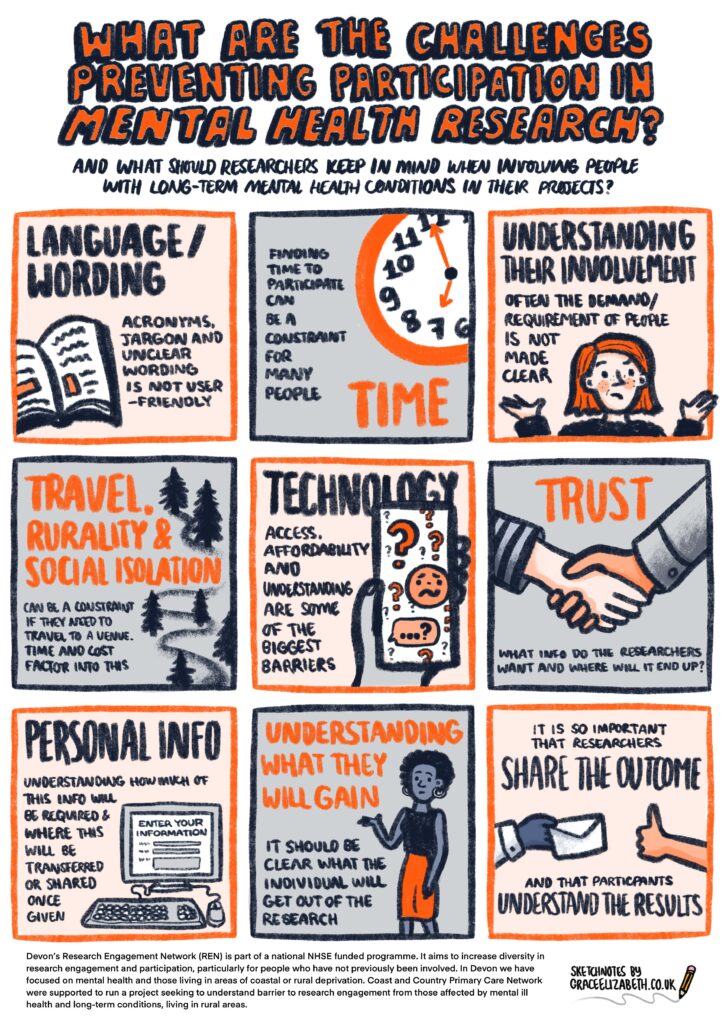
- Increased understanding of the barriers to engaging in research in specific communities (rural/costal/those affected by mental ill health)
- Increased diversity and community activity in research
- Better awareness of health inequalities for researchers
- Increased awareness of role the VCSE can play in increasing engagement in research
- Increased engagement between researchers and the VCSE
- Creating a legacy through the development of a Research Community of Practice
Website Links
I think that a sustainable research engagement network requires support, oversight and resource; doing this through an infrastructure that already exists negates the need for establishing new networks. There is a need to embed innovative ways to include the VCSE in research design and outreach and this project has allowed us to explore this in more depth. We need to eventually be able to demonstrate that the engagement with communities leads to research participation and involvement linked to the available opportunities. This project has given us ideas on which to build on for the future.
Dr Pauline McGlone, Deputy Chief Operating Officer, NIHR Clinical Research Network South West Peninsula (CRN)